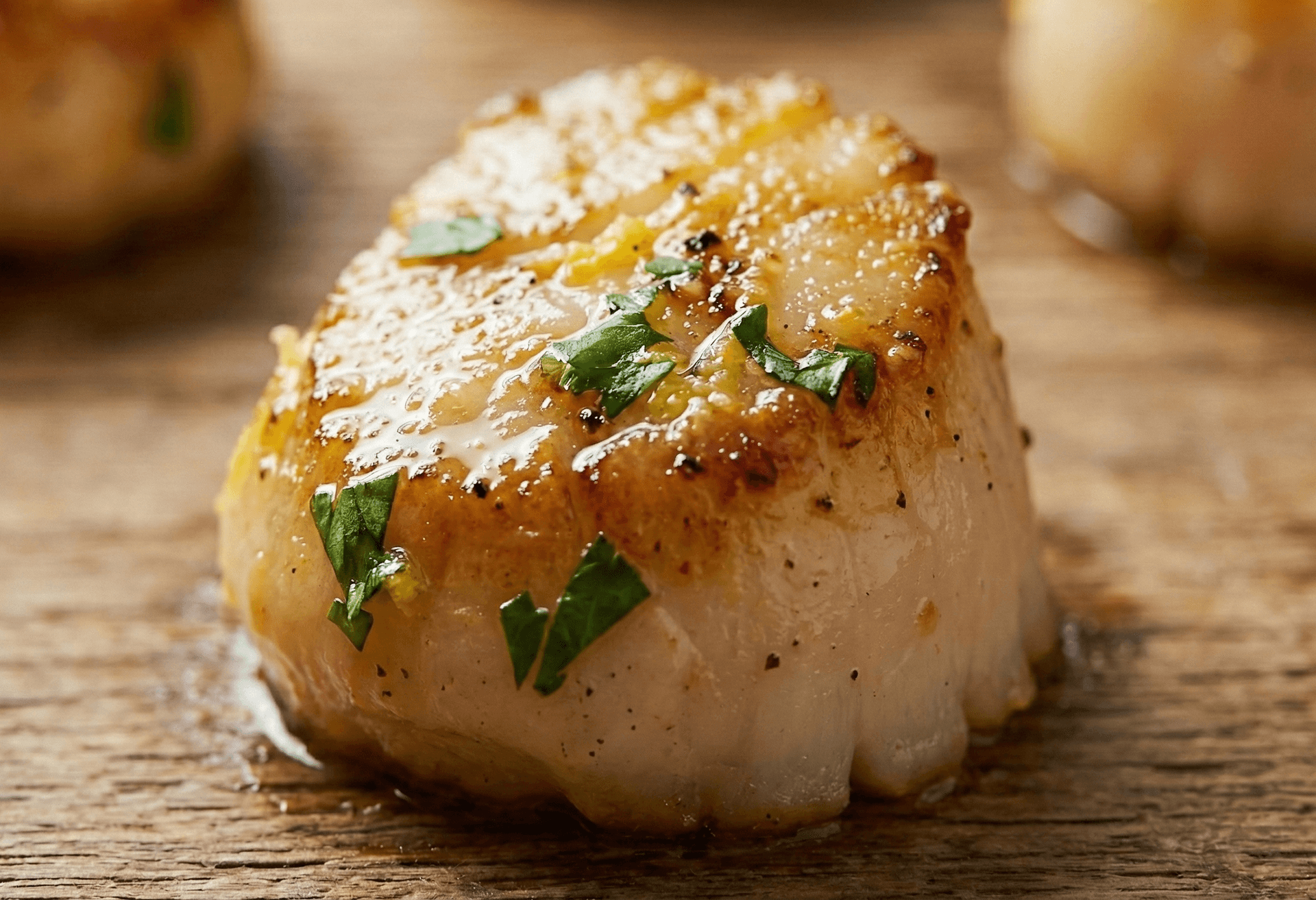
There's a reason chefs fly Nantucket bay scallops across the country at $30 a pound. These aren't the rubbery, water-logged discs you find in grocery stores. These are small, sweet jewels that taste like the ocean distilled into its purest form.
The secret to cooking them? Do almost nothing. A screaming hot pan, 90 seconds per side, and the courage to leave them alone. My grandmother taught me this recipe in about fifteen seconds. It took me years to trust it.
The Ingredient
Nantucket bay scallops (Argopecten irradians) are harvested by hand from the island's harbors and tidal flats from October through March. They're smaller than sea scallops—about the size of a large marble—but their flavor is incomparably sweeter and more delicate.
What makes them special? The cold, clean water. The eelgrass beds where they grow. The fact that they're wild-harvested, not farmed. And the simple reality that demand always exceeds supply, which means the best ones never leave the island.
Where to Source
- Sayle's Seafood (99 Washington St Extension) — The real deal since 1965. Call ahead during scallop season.
- 167 Raw — Pristine shellfish, retail and raw bar
- East Coast Seafood — At the harbor, straight off the boats
- Local scallopers — If you know someone, ask. If you don't, make friends.
What to look for: Fresh bay scallops should smell like the ocean—briny and clean, never fishy. They should be cream-colored to light pink, slightly sticky to the touch, and definitely not sitting in liquid.
Ingredients
- Fresh Nantucket bay scallops 1 lb
- Unsalted butter 3 tbsp
- Good olive oil 1 tbsp
- Flaky sea salt to taste
- Fresh lemon 1/2
- Fresh parsley, chopped (optional) 1 tbsp
Instructions
- Pat the scallops completely dry. This is the most important step. Wet scallops steam instead of sear, and steamed scallops are sad scallops. Use paper towels, press gently, and then let them sit on a clean towel for a few minutes if you have time.
- Heat your pan until it's screaming hot. Cast iron is ideal, but any heavy-bottomed pan works. Add the olive oil and 1 tablespoon of butter. The butter should foam immediately and just start to brown.
- Add the scallops in a single layer. Don't crowd the pan—work in batches if needed. The scallops should sizzle aggressively when they hit the pan. If they don't, your pan isn't hot enough.
- Don't touch them. This is where trust comes in. Let them cook undisturbed for 90 seconds. They're developing a golden crust on the bottom, and if you move them, you'll ruin it.
- Flip once. They should release easily and have a beautiful golden-brown sear. Cook for another 60-90 seconds on the second side. The scallops are done when they're just opaque in the center—still slightly translucent is perfect.
- Finish with remaining butter and lemon. Remove pan from heat, add the remaining 2 tablespoons of butter, and swirl to create a quick pan sauce. Squeeze half a lemon over the scallops, sprinkle with flaky salt and parsley.
- Serve immediately. Bay scallops wait for no one. They're best eaten within about 30 seconds of leaving the pan.
Sally's Tips
Never, ever buy "wet" scallops treated with sodium tripolyphosphate (STP). They absorb water, won't sear properly, and taste like nothing. Ask your fishmonger for "dry" or "diver" scallops. On Nantucket, you shouldn't have to ask—but off-island, always check.
Serve With
- Crusty bread to soak up the butter sauce
- Simple arugula salad with lemon vinaigrette
- Risotto or creamy polenta for a heartier meal
- Nothing at all—they're perfect on their own
The Story
Scalloping on Nantucket is a tradition that goes back generations. Every October 1st, when the season opens, you'll see locals in waders combing the shallows of Madaket Harbor, Polpis, and Coskata with dip nets. It's cold, wet work—but the reward is the sweetest scallop you'll ever taste.
My grandmother always said you could tell a true Nantucketer by whether they knew how to open a scallop shell. I was six when she taught me. The trick is finding the right spot on the hinge. After that, it's just practice.